How Testing Material Strength underFlaw Shapes Structural Integrity and Industrial Decision-Making in 2026

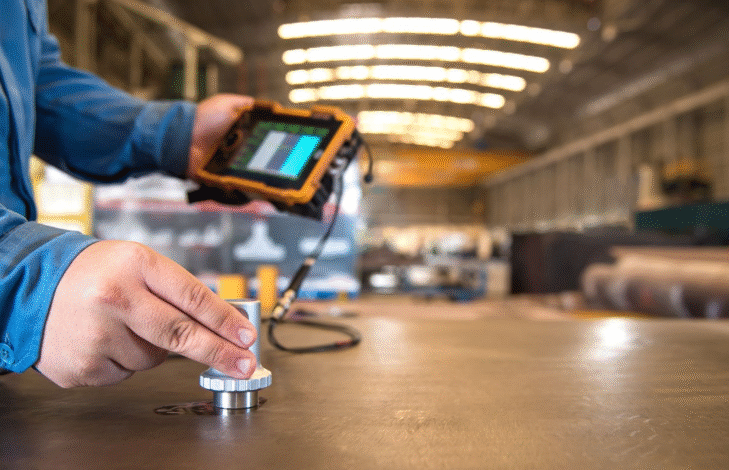
In 2026, claiming “perfect materials” is a naive illusion. Real industrial power comes from knowing exactly where a structure will break before it does. Across offshore platforms, heavy fabrication, and high-stakes manufacturing, the smart players aren’t chasing flawlessness—they’re quantifying resilience. They are reading the invisible, measuring what’s hidden, and turning what others fear into strategic foresight. Testing resistance under real-world conditions is no longer a checkbox—it is a currency of control.
1. The Survival Measure ofCrack-Like Welding Defects: Resilience amidst Flaws
Old-school tensile numbers only tell half the story. Micro-cracks, voids, and stress concentrations exist from the moment a weld cools or a casting solidifies.That’s where ctod test purpose becomes foundational in assessing whether welded joints with crack-like imperfections can tolerate stress or absorb stress and redistribute it safely without shifting suddenly into brittle fracture.
Ø CTOD testing expose the exact point and how fast a crack transforms from stable to runaway.
Ø Decision Leverage: Engineers can make the high-stakes call: operate safely until maintenance or intervene immediately.
Ø Strategic Edge: Guesswork is dead. Every decision now rests on quantified insight.
This isn’t academic—it’s battlefield intelligence for operations. Understanding how materials respond under stress transforms confidence from hopeful assumption to calculated assurance.
2. Hidden Vulnerabilities as Operational Inputs
On the surface, untested micro-stresses, residual thermal distortions, and cyclic fatigue often trigger assumptions that a component or weld is unsafe or at risk of immediate failure. But with advanced tech that allow testing of sharp cracks to determine the vulnerability of a fracture, businesses can avoid unnecessary cost of withdrawal where fractures do not prove functionality failure.
The structure may be more resilient than expected, with capacity to withstand operational stresses safely. And if not, businesses can take next best cause of action without turning back or risking surprise failures.
Ø Heavy-Plate Welds: 80mm+ steel plates harbor stress zones invisible to conventional inspection. Pre-testing ensures these joints endure, not fail catastrophically.
Ø Extreme Environments: Subsea and cryogenic applications require a known safe temperature window. Material toughness data gives you that window, not just a guess.
Ø Fatigue Forecasting: DCPD-based crack growth tracking transforms time-to-failure into predictable planning, letting maintenance be strategic rather than reactive.
Here, vulnerabilities aren’t liabilities—they are design parameters, guiding operations around truth, not hope.
See also: The Impact of Technology on Modern Society
3. Enhancing Legal and Financial Immunity Through Measured Resilience
Unlike in nominal safety, by blending CTOD and structural diagnostics, you quantify exactly how much damage a part can withstand before failing. That way, you aren’t guessing; you have measured the resilience margin. Quantifying material resistance isn’t just engineering—it’s strategic insurance.
Ø De-risk Liability: Shows regulators and insurers you engineered for the worst-case scenario.
Ø Maximize Asset Life: Instead of scrapping a $50M platform, reinforcement informed by testing keeps it productive.
Ø Procurement Precision: Reject material batches that don’t meet quantified toughness—before they become embedded risks.
This “Survival Calculus” converts uncertainty into predictable, controllable outcomes, turning technical insight into financial and operational leverage.
4. Engineering Critical Assessment: Turning Data Into Decisions
When small cracks appear in service, the right information helps decide the next step. CTOD testing supports Engineering Critical Assessments (ECA), giving clear insight into structural safety.
Ø Operational use: Combining CTOD with inspections helps determine if the impact has reached critical defect level; if the crack is smaller than the critical size, the part is safe to continue (under monitoring). If it’s approaching the limit, you schedule a repair.
Ø Financial benefit: That eliminates fear-based maintenance, where technicians see a tiny scratch and replace a multi-million dollar component because they don’t know the “Truth Inside.”
Testing provides actionable intelligence, not just a pass/fail answer.
In essence, while standard “Material Strength” tests (like Tensile Testing) tell you how much a material can carry before it deforms, CTOD tells you how the material behaves once a “failure” has already started. In the high-stakes industries of 2026, this is the difference between a controlled shutdown and a catastrophic explosion. The technique enhances the ability to perform a fitness-for-service (FFS) assessment for pressurized components and equipment.
As such, you don’t just pick the “strongest” metal; you pick the one with the highest Fracture Toughness for the environment. However, outsourcing your material testing needs to a top-tier lab is a crucial pivot that acts as your “General Counsel for Materials,” translating raw physics into the “Actionable Decisions.”